
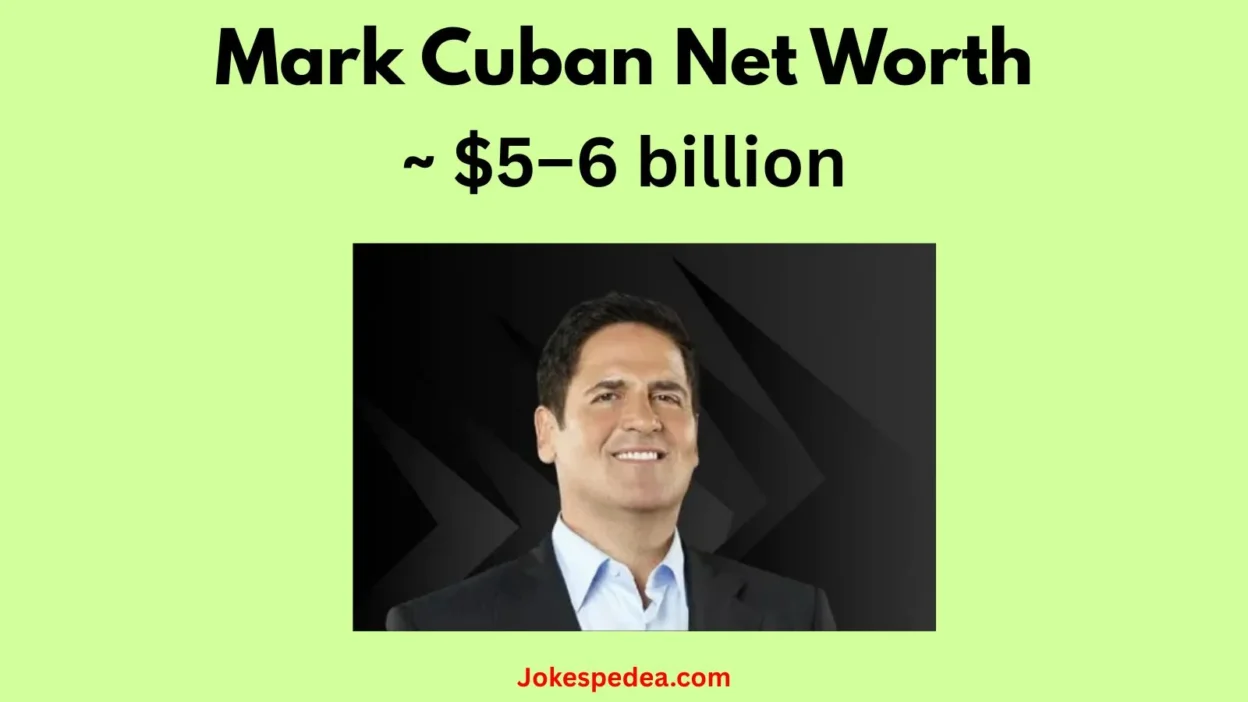
Mark Cuban net worth continues to attract massive attention as people try to understand how one of America’s most successful entrepreneurs built his fortune.
As of recent estimates, Mark Cuban has a net worth of around $5–6 billion, placing him among the wealthiest business figures in the world.
His journey from a tech startup founder to a billionaire investor and sports team owner is a classic example of strategic wealth creation.
A large portion of his fortune came from the sale of Broadcast.com during the dot-com boom, followed by decades of smart investments, business ventures, and ownership of the Dallas Mavericks.
Beyond the headline number, readers are often interested in how his wealth is structured and what drives its growth today.
In this article, we’ll explore his net worth in detail, break down his income sources, and uncover the key moves that helped him reach billionaire status.
📊 Mark Cuban Net Worth Breakdown (Estimated)
| Category | Estimated Value (USD) | Details |
| Total Net Worth | $5 – $6 Billion | Combined value of all assets and investments |
| Broadcast.com Sale (Historic) | ~$5.7 Billion (before taxes) | Sold to Yahoo in 1999; primary wealth catalyst |
| Dallas Mavericks Ownership | ~$2 – $3 Billion (valuation-based) | NBA team asset (major contributor to net worth) |
| Startup Investments | $500M – $1 Billion | Equity in multiple startups via Shark Tank & private investing |
| Public & Private Equity Holdings | $500M+ | Stakes in tech, healthcare, AI, and other sectors |
| Real Estate Assets | $100M+ | Luxury homes and properties in the U.S. |
| Cash & Liquid Assets | $100M+ | Available liquidity for investments and operations |
| Other Business Interests | $100M+ | Media, advisory roles, and additional ventures |
📌 Explanation
Mark Cuban’s wealth is highly diversified, with no single income source dominating his entire fortune today. While the Broadcast.com sale provided the initial foundation, his continued investments, equity holdings, and ownership of the Dallas Mavericks have significantly contributed to maintaining and growing his net worth over time. His portfolio reflects a balance between high-growth startups and stable long-term assets.
What Is Mark Cuban’s Net Worth in 2026?
The estimated net worth of Mark Cuban in 2026 is generally reported to be in the range of $5 billion to $6 billion. This figure is not fixed, as billionaire wealth tends to fluctuate based on market conditions, asset valuations, and investment performance. Unlike salaried income, Cuban’s net worth is largely tied to equity in businesses, private investments, and long-term holdings rather than liquid cash.
A significant portion of his wealth comes from the continued valuation of the Dallas Mavericks, which has appreciated over time as NBA franchises have grown in commercial value. In addition, his portfolio of startup investments—many of which are made through his role on Shark Tank—adds both realized and unrealized gains to his overall financial picture. These investments can rise or fall depending on company performance, exits, or funding rounds.
It’s also important to note that Cuban’s wealth is diversified across multiple sectors, including technology, healthcare, and media. This diversification helps stabilize his net worth over time, even when certain markets experience downturns. Overall, his billionaire status remains strong, supported by a combination of legacy assets and ongoing investment activity.
How Did Mark Cuban Make His Money?
The wealth of Mark Cuban didn’t happen overnight—it was built through a combination of entrepreneurship, timing, and strategic decision-making. His first major financial breakthrough came from co-founding Broadcast.com, an internet streaming company that became highly successful during the early days of the internet boom. In 1999, he sold Broadcast.com to Yahoo for billions of dollars, which instantly turned him into a billionaire and laid the foundation for his future wealth.
Before this major exit, Cuban had already been involved in smaller ventures and entrepreneurial efforts that helped him develop the skills and mindset needed to scale a business. These early experiences played a crucial role in shaping his approach to risk, innovation, and opportunity recognition.
After achieving financial success, Cuban shifted his focus from building a single company to diversifying his wealth through investments and ownership. He began investing in startups, many of which gained visibility through his role on Shark Tank. Over time, his investment strategy expanded across multiple industries, including technology, healthcare, and media.
In addition, his ownership of the Dallas Mavericks has contributed to both his wealth and public profile, making him not just an investor but also a prominent sports business figure.
Mark Cuban’s Income Sources Explained
The income of Mark Cuban comes from multiple streams, which is a key reason behind the stability and growth of his net worth. Unlike individuals who rely on a single salary, Cuban’s earnings are spread across investments, ownership stakes, and media involvement.
One of his primary income sources is returns from startup investments. Through his participation in Shark Tank and private deals, he invests in early-stage companies in exchange for equity. When these companies grow, get acquired, or go public, his shares can generate significant profits. Some investments may not succeed, but successful exits often outweigh the losses.
Another major source of income is his ownership stake in the Dallas Mavericks. As an NBA team owner, he benefits from the franchise’s increasing valuation, revenue streams such as ticket sales, broadcasting rights, sponsorships, and merchandise. While this is more of a long-term asset than direct cash flow, it contributes heavily to his overall wealth.
Cuban also earns from media appearances, speaking engagements, and advisory roles. His visibility on Shark Tank has strengthened his personal brand, indirectly increasing his deal flow and investment opportunities. Combined, these diverse income streams create a well-balanced financial portfolio that continues to support and grow his billionaire status.
Major Investments That Contribute to His Net Worth
A significant portion of the wealth of Mark Cuban comes from his diversified investment portfolio. Over the years, he has invested in a wide range of startups and companies across industries such as technology, healthcare, artificial intelligence, consumer goods, and media. His investment strategy focuses on identifying scalable businesses with strong growth potential early in their lifecycle.
Many of Cuban’s investments are made through his role on Shark Tank, where he acquires equity in promising startups in exchange for capital and mentorship. These deals often give him access to companies at an early stage, allowing for substantial returns if the business succeeds. Some of these ventures have grown into well-known brands, while others contribute smaller but consistent returns.
Outside of television deals, Cuban also invests privately in companies that align with his interests in innovation and disruption. He has shown particular interest in industries that leverage technology to improve efficiency, reduce costs, or solve real-world problems. This includes sectors like healthcare tech, SaaS platforms, and AI-driven solutions.
His investment portfolio is a mix of high-risk, high-reward startups and more stable equity positions, which helps balance potential losses with long-term gains. This strategic approach plays a crucial role in maintaining and growing his overall net worth.
Ownership of the Dallas Mavericks
One of the most valuable and recognizable assets owned by Mark Cuban is his majority ownership of the Dallas Mavericks, an NBA franchise he purchased in 2000. At the time of acquisition, the team was valued significantly lower than it is today. Over the years, however, the overall value of NBA franchises has increased dramatically due to rising media rights deals, global fan engagement, sponsorships, and league expansion in popularity.
Owning the Mavericks contributes to Cuban’s net worth not only through the appreciation of the franchise itself but also through associated revenue streams. These include ticket sales, broadcasting contracts, merchandise, and corporate partnerships. As the team’s value grows, so does his equity stake, making it a long-term appreciating asset rather than a short-term income source.
Beyond financial returns, Cuban’s ownership has also elevated his public profile. His active involvement in team decisions, outspoken personality, and presence courtside have made him one of the most visible owners in professional sports. This visibility indirectly supports his broader brand, opening doors to more investment opportunities and business ventures.
Overall, the Dallas Mavericks represent a cornerstone of Cuban’s wealth portfolio, combining financial growth with strong brand influence in the sports and business world.
Shark Tank and Media Influence
The media presence of Mark Cuban has played a significant role in strengthening his brand and indirectly supporting his net worth. His participation as a prominent investor on the television show Shark Tank has not only provided direct investment opportunities but also expanded his visibility among entrepreneurs, startups, and the general public.
On the show, Cuban evaluates business pitches and chooses to invest in companies in exchange for equity. These deals often give him early access to innovative startups that have the potential to scale rapidly. While not every investment becomes a major success, some have grown substantially, contributing positively to his overall portfolio returns.
Beyond financial gains, Shark Tank has amplified Cuban’s reputation as a savvy and approachable investor. This increased exposure leads to a higher volume of deal flow, as more entrepreneurs seek his backing both on and off the show. It also enhances his influence in the startup ecosystem, allowing him to identify and support emerging trends early.
In addition to Shark Tank, Cuban’s appearances in interviews, podcasts, and business discussions further strengthen his public image. This media influence does not directly generate the majority of his wealth, but it plays an important indirect role by expanding opportunities and reinforcing his position as a leading figure in entrepreneurship and investing.
Assets Owned by Mark Cuban
The wealth of Mark Cuban is supported by a diverse range of assets that go beyond cash and investments. These assets include real estate properties, equity holdings, luxury items, and business interests that collectively contribute to his overall net worth.
One of his notable asset categories is real estate. Cuban owns high-value properties in the United States, including luxury homes that reflect both personal use and long-term investment value. Real estate plays an important role in wealth preservation, offering stability and potential appreciation over time.
In addition to property, Cuban holds significant equity stakes in private companies and startups. These investments form a major portion of his portfolio and can vary in value depending on company performance, funding rounds, or exits. Some of these stakes may not be immediately liquid but can generate substantial returns when monetized.
Cuban also owns high-end assets such as private jets, which support his travel needs for business, media appearances, and personal commitments. While these assets involve maintenance costs, they provide convenience and efficiency for a highly active business lifestyle.
Overall, his asset portfolio is well-diversified across multiple categories, combining tangible properties with financial investments, which helps maintain and grow his billionaire status over time.
Mark Cuban’s Investment Philosophy
The investment approach of Mark Cuban is shaped by practicality, risk awareness, and a strong focus on long-term value. Rather than following trends blindly, Cuban emphasizes understanding the fundamentals of a business before committing capital. He often looks for companies that solve real problems, have scalable models, and demonstrate clear paths to profitability.
A key aspect of his philosophy is diversification. Cuban avoids concentrating his wealth in a single asset or industry. Instead, he spreads his investments across multiple sectors such as technology, healthcare, and consumer services. This approach helps reduce risk while increasing the chances of capturing high-growth opportunities in different markets.
He is also known for being selective with deals, preferring quality over quantity. While he invests in many startups, he tends to focus on businesses where he can add value beyond just funding, such as providing strategic guidance, mentorship, or industry insights. His role on Shark Tank reflects this mindset, as he often partners with entrepreneurs who align with his vision and expertise.
Additionally, Cuban values liquidity and control, ensuring that he maintains flexibility in managing his portfolio. His philosophy balances calculated risk with informed decision-making, which has played a significant role in sustaining and growing his net worth over time.
How Mark Cuban Manages and Grows His Wealth
The wealth of Mark Cuban is not just built through earning—it is carefully managed and continuously grown through strategic financial decisions. His approach focuses on maintaining a balance between risk and stability while ensuring long-term sustainability of his portfolio.
One of the key elements of his wealth management strategy is diversification. Cuban spreads his investments across various asset classes, including startups, equities, real estate, and business ownership. This reduces dependence on any single source of income and helps protect his net worth from market volatility.
He also emphasizes reinvestment. Instead of relying heavily on passive income, Cuban often reinvests profits from successful ventures back into new opportunities. This compounding effect allows his wealth to grow over time, especially when early-stage investments mature or reach successful exits.
Another important aspect is liquidity management. While a large portion of his wealth is tied to illiquid assets like private companies and the Dallas Mavericks, Cuban maintains enough liquid capital to take advantage of new investment opportunities when they arise.
Additionally, Cuban relies on data-driven decision-making and continuous learning to stay ahead in changing markets. By adapting to new technologies, trends, and industries, he ensures that his investment strategy remains relevant, efficient, and capable of sustaining long-term wealth growth.
Mark Cuban Net Worth Timeline
The net worth of Mark Cuban has evolved significantly over the course of his career, reflecting key milestones in his entrepreneurial journey and investment success. In the early stages of his career, Cuban’s net worth was relatively modest, as he worked on small ventures and built experience in the tech and business world.
A major turning point came in 1999 with the sale of Broadcast.com to Yahoo. This landmark deal dramatically increased his wealth, pushing him into billionaire status almost overnight. At that time, the dot-com boom played a crucial role in inflating valuations, and Cuban successfully capitalized on the opportunity by exiting at the right moment.
Following this success, his net worth continued to grow steadily through investments, ownership stakes, and business ventures. His purchase of the Dallas Mavericks in 2000 added a long-term appreciating asset to his portfolio. Over the years, as the NBA gained global popularity and franchise valuations increased, this investment became a significant contributor to his overall wealth.
In more recent years, Cuban’s net worth has fluctuated within the billion-dollar range due to market conditions, startup valuations, and broader economic trends. Despite these fluctuations, his diversified portfolio and ongoing investment activity have helped maintain a consistently high level of wealth over time.
Comparison With Other Billionaires
When comparing the wealth of Mark Cuban to other billionaires, it’s clear that his net worth—estimated between $5 billion and $6 billion—places him among the upper tier of global entrepreneurs, though not at the very top of the billionaire rankings. Unlike ultra-high-net-worth individuals whose fortunes exceed tens or even hundreds of billions, Cuban’s wealth is more modest in comparison, but still highly influential.
What sets Cuban apart is not just the size of his fortune, but the way he built it. Many billionaires accumulate wealth through long-term control of massive corporations or inherited assets, whereas Cuban achieved billionaire status largely through a combination of entrepreneurship, a major business exit, and strategic reinvestment. His sale of Broadcast.com was a pivotal moment that enabled him to diversify into investments and ownership rather than relying on a single company.
Compared to other investors and media personalities, Cuban’s portfolio is also notably diversified. His ownership of the Dallas Mavericks, combined with startup investments and media presence, creates a unique blend of assets. While he may not rank among the top 10 richest individuals globally, his influence in business, sports, and media far exceeds what his net worth alone might suggest, making him a distinctive figure among billionaires.
Key Lessons From Mark Cuban’s Wealth Journey
The financial journey of Mark Cuban offers several valuable lessons for entrepreneurs, investors, and anyone interested in building long-term wealth. One of the most important takeaways is the power of timing. Cuban’s sale of Broadcast.com during the dot-com boom highlights how recognizing the right moment to exit a business can significantly impact overall wealth.
Another key lesson is the importance of diversification. Instead of relying on a single source of income, Cuban spread his wealth across multiple areas, including startups, real estate, and sports ownership. This approach helps reduce risk while increasing the potential for consistent growth over time. It also ensures that downturns in one sector do not heavily impact his entire portfolio.
Cuban’s journey also emphasizes the value of continuous learning and adaptability. He has consistently evolved with changing markets, embracing new technologies and industries such as AI and healthcare innovation. This willingness to stay updated allows him to identify emerging opportunities early.
Additionally, his success shows that calculated risk-taking is essential in wealth building. Rather than avoiding risk entirely, Cuban evaluates opportunities carefully and invests where he sees strong potential. Combined with discipline, strategic thinking, and persistence, these principles form the foundation of his long-standing financial success.
Conclusion
The story of Mark Cuban is a powerful example of how strategic thinking, timing, and diversification can build and sustain massive wealth over time. With an estimated net worth of $5–6 billion, his fortune is not tied to a single income source but is spread across multiple streams, including business ownership, startup investments, media presence, and real estate.
From the early success of Broadcast.com to his long-term ownership of the Dallas Mavericks, Cuban has consistently made decisions that prioritize growth and long-term value. His involvement in Shark Tank further expanded his access to promising startups, reinforcing his position as both an investor and a mentor in the entrepreneurial ecosystem.
What makes his financial journey particularly interesting is not just the size of his wealth, but the strategy behind it. His focus on diversification, reinvestment, and calculated risk-taking has allowed him to remain financially strong despite market fluctuations.
For readers researching Mark Cuban net worth, the key takeaway is clear: his wealth is the result of continuous innovation, smart investments, and the ability to adapt over time—principles that can inspire anyone aiming to build their own financial success.