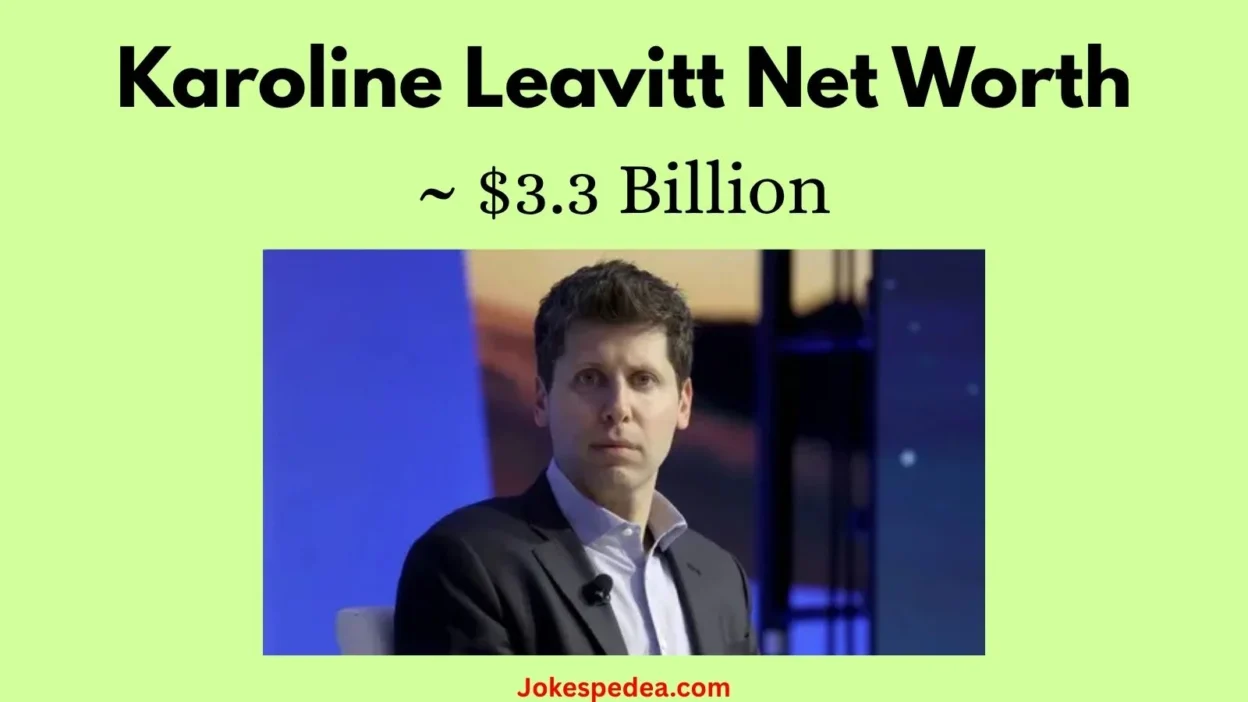
Sam Altman net worth is estimated to be between $2 billion and $4.7 billion as of 2026, making him one of the most influential yet unconventional billionaires in the tech industry.
As the CEO of OpenAI, the company behind ChatGPT, many people assume his fortune is far larger—similar to other Silicon Valley giants. However, his wealth story is surprisingly different.
Unlike typical tech founders, Sam Altman does not hold major equity in OpenAI, which limits his direct financial gains from the company’s massive valuation.
Instead, his fortune comes from decades of strategic startup investing, venture capital activity, and early stakes in some of the most successful tech companies in the world.
This unique financial structure sets him apart from most billionaires. In this article, we’ll explore how Sam Altman built his wealth, where his money comes from, and why his net worth is so different from other tech leaders in the AI era.
Sam Altman Net Worth – Quick Breakdown (2026)
Sam Altman’s estimated net worth of $2 billion to $4.7 billion is not based on a single company stake, but rather a diversified mix of investments, venture capital returns, and startup equity. Unlike traditional tech billionaires, his wealth is spread across multiple high-growth assets, making it more complex and less publicly visible.
Below is a simple breakdown of his estimated net worth structure:
📊 Sam Altman Net Worth Table (Estimated 2026)
| Category | Estimated Value | Details |
| Venture Capital Investments | $1.2B – $2.5B | Early-stage investments in startups like Stripe, Airbnb, Reddit |
| Private Startup Equity | $500M – $1B | Stakes in AI, energy, and deep-tech companies |
| Y Combinator Influence Returns | $200M – $500M | Indirect gains from startup ecosystem exposure |
| Liquid Assets & Cash | $50M – $150M | Cash holdings, funds, and short-term investments |
| Real Estate & Personal Assets | $30M – $100M | Property and personal high-value assets |
| OpenAI Earnings | Minimal / Salary-based | Reported modest salary compared to industry CEOs |
📌 Key Insight
Most of Sam Altman’s wealth is paper wealth, meaning it depends on startup valuations and future exits rather than guaranteed liquid cash. This is why his net worth can fluctuate significantly depending on market conditions, IPOs, and AI industry growth.
Unlike traditional billionaires who rely on one major company, Altman’s fortune is built like a portfolio of high-risk, high-reward bets, making it both powerful and unpredictable in the long run.
Who Is Sam Altman?
Sam Altman is an American entrepreneur, investor, and technology executive best known as the CEO of OpenAI, the company behind ChatGPT. He is one of the most influential figures in the artificial intelligence revolution and a key voice shaping the future of AI development worldwide.
Born in 1985 in Chicago, Illinois, Sam Altman showed an early interest in computers and programming. He later attended Stanford University to study computer science, but he dropped out before completing his degree to pursue entrepreneurship. This decision marked the beginning of his journey in Silicon Valley.
His first major startup was Loopt, a location-based social networking app that allowed users to share their location with friends. Although the company was eventually acquired by Green Dot Corporation, it gave Altman his first real experience in the startup world.
Altman later became the president of Y Combinator, one of the world’s most powerful startup accelerators. During his time there, he helped fund and mentor hundreds of successful startups, giving him early access to some of the most valuable companies in tech.
Today, he is best known for leading OpenAI and driving the global AI boom. However, unlike many tech CEOs, his personal wealth is not tied heavily to OpenAI ownership. Instead, his influence comes from years of investing, mentoring, and shaping the startup ecosystem, which ultimately built the foundation of his multi-billion-dollar net worth.
How Did Sam Altman Make His Money?
Sam Altman built his wealth through a combination of entrepreneurship, venture capital investing, and early exposure to some of the most successful startups in Silicon Valley. Unlike traditional tech billionaires who earn most of their money from owning a single company, Altman’s fortune is based on a diversified investment strategy.
His financial journey began with his first startup, Loopt, which gave him early experience in building and scaling a company. After its acquisition, he moved deeper into the startup ecosystem, eventually becoming the president of Y Combinator, one of the most powerful startup accelerators in the world.
At Y Combinator, Altman gained access to hundreds of early-stage startups before they became global giants. This position allowed him to invest in and support companies like Stripe, Airbnb, and Reddit, which later became multi-billion-dollar businesses. These early bets significantly contributed to his growing wealth.
In addition to startup investing, Altman also built his own venture capital network, investing in hundreds of companies across artificial intelligence, energy, biotech, and advanced technology sectors. His portfolio is estimated to include more than 400 startups, many of which are still in early or growth stages.
Another important part of his income comes from his role at OpenAI, although his salary is relatively modest compared to other tech CEOs. Instead of relying on salary or equity from a single company, Altman’s wealth is built on long-term investment returns, making his financial profile highly diversified and future-focused.
Sam Altman’s Major Investments
A major part of Sam Altman net worth comes from his highly successful investment portfolio, which spans hundreds of startups across multiple industries. Instead of relying on a single company for wealth, Altman has built a diversified network of early-stage and high-growth investments.
One of his most well-known investment successes includes Stripe, the global online payment processing company. Early investors in Stripe saw massive returns as the company grew into one of the most valuable fintech firms in the world. Another major win is Airbnb, which revolutionized the travel and hospitality industry and delivered strong returns for early backers.
Altman has also invested in Reddit, one of the largest social media platforms, which continues to grow in influence and valuation. These early bets significantly boosted his long-term wealth and reputation as a smart investor.
Beyond traditional tech, he has also focused heavily on future-oriented industries. His investments include companies like Helion Energy, which works on nuclear fusion technology, and Oklo, a company developing advanced nuclear energy solutions. These high-risk, high-reward bets reflect his belief in long-term technological disruption.
In total, Altman is estimated to have stakes in 400+ startups, covering sectors such as artificial intelligence, biotech, energy, and software. Many of these companies are still private, meaning their true value could increase dramatically in the future.
This investment strategy plays a crucial role in shaping his overall net worth, making it highly dynamic and closely tied to the growth of innovation-driven industries rather than traditional salary income.
Does Sam Altman Own OpenAI?
One of the biggest misconceptions about Sam Altman net worth is that his wealth comes mainly from owning OpenAI. In reality, Sam Altman does not hold significant equity in OpenAI, which is unusual for a CEO of such a high-value company.
OpenAI was originally founded as a non-profit research organization and later transitioned into a “capped-profit” structure. This unique setup means that ownership and profit distribution work differently compared to traditional tech companies. As a result, even though OpenAI is valued in the hundreds of billions of dollars, that valuation does not directly translate into Altman’s personal wealth.
Instead of equity-based earnings, Sam Altman reportedly earns a relatively modest salary compared to other Silicon Valley CEOs. Earlier reports suggested figures in the range of tens of thousands to a few hundred thousand dollars annually, which is extremely low for someone leading a company of OpenAI’s scale.
This structure is one of the key reasons why his net worth is much lower than expected. Unlike founders such as Elon Musk or Mark Zuckerberg, who hold large ownership stakes in their companies, Altman’s financial success comes primarily from outside investments rather than OpenAI itself.
However, his influence at OpenAI still plays an indirect role in his wealth. By leading one of the most important AI companies in the world, he gains access to cutting-edge technology trends, elite investor networks, and early-stage opportunities that help grow his broader investment portfolio.
In short, Sam Altman leads OpenAI, but he does not own it in a way that significantly drives his net worth.
Why Sam Altman’s Net Worth Is So Unusual
The structure of Sam Altman net worth is very different from most billionaires in the tech world, and that’s what makes it so unusual. While many Silicon Valley leaders become extremely wealthy by owning large shares of the companies they build, Altman’s wealth comes mainly from investments rather than direct company ownership.
For example, billionaires like Elon Musk and Mark Zuckerberg built their fortunes through massive equity stakes in their companies. Similarly, Jeff Bezos accumulated wealth through long-term ownership in Amazon. In all these cases, one company played a dominant role in their net worth.
Sam Altman, however, follows a completely different path. He does not rely on a single “mega-equity” asset. Instead, his wealth is spread across hundreds of early-stage startups, venture capital deals, and private investments. This makes his net worth more diversified but also less transparent.
Another unusual factor is his role in OpenAI. Even though OpenAI is one of the most valuable AI companies in the world, it does not directly contribute much to his personal fortune due to its capped-profit structure and limited ownership distribution.
This creates a rare situation in Silicon Valley: a person who is one of the most influential leaders in the AI revolution, yet not one of the richest CEOs in terms of direct company ownership.
In short, Sam Altman’s wealth is built like a portfolio of innovation bets, not a single corporate empire—making him one of the most unique billionaire profiles in modern tech history.
Sam Altman Net Worth Over Time
The growth of Sam Altman net worth has not followed a simple upward curve like many tech billionaires. Instead, his wealth has increased gradually through different phases of his career, driven mainly by investments and startup ecosystem influence rather than a single breakthrough IPO.
In his early career, Altman had limited personal wealth while building his first startup, Loopt, which was eventually acquired. This exit gave him initial capital and credibility in Silicon Valley but did not make him extremely wealthy.
His financial growth accelerated significantly during his time at Y Combinator, where he gained access to hundreds of early-stage startups. During this period, his wealth grew steadily as he began investing in high-potential companies such as Stripe, Airbnb, and Reddit. These early investments became major long-term wealth drivers.
Before the AI boom, his net worth was already estimated in the hundreds of millions, largely due to venture capital returns and startup equity. However, the launch and global explosion of ChatGPT significantly increased his visibility and indirectly boosted the valuation of many AI-related investments in his portfolio.
In the 2020s, his estimated net worth crossed into the multi-billion-dollar range, primarily due to rising valuations in AI, energy, and deep-tech startups. Unlike traditional billionaires, his wealth does not come from sudden IPO windfalls but from slow, compounding investment growth.
Today, his net worth continues to evolve based on private market valuations, making it highly dynamic and closely tied to the future of technology innovation.
Sam Altman vs Other Tech Billionaires
When comparing Sam Altman net worth with other major tech billionaires, the difference is not just in the amount of money, but in how that wealth is built. Altman’s financial profile stands out because it is based on investments and ecosystem influence rather than massive ownership in a single company.
For example, Elon Musk has built most of his wealth through large equity stakes in companies like Tesla and SpaceX. Similarly, Mark Zuckerberg gained his fortune through ownership of Meta, while Jeff Bezos accumulated wealth from long-term Amazon shares. In all these cases, one dominant company is responsible for the majority of their net worth.
Sam Altman, on the other hand, does not follow this pattern. His wealth is spread across hundreds of startups and venture investments instead of being tied to a single high-valuation company like OpenAI. This makes his net worth more diversified but also less concentrated.
Another key difference is liquidity. Many tech billionaires hold large amounts of publicly traded stock, making their wealth easier to measure. Altman’s portfolio, however, is mostly private investments, meaning its real value depends on future exits such as IPOs or acquisitions.
In terms of scale, Altman’s net worth—estimated in the low billions—is significantly smaller than the world’s richest tech founders, who are often worth tens or even hundreds of billions.
However, what makes Altman unique is his influence over the AI industry, which far exceeds what his net worth alone might suggest. He is not just building wealth—he is shaping the direction of future technology.
Sam Altman’s Assets and Lifestyle
When looking at Sam Altman net worth, it’s important to understand that his wealth is not only tied to investments, but also to his overall lifestyle and assets. Unlike many billionaires who display extreme luxury, Altman is known for maintaining a relatively low-profile and practical approach to wealth.
A significant portion of his assets is tied up in private investments and venture capital holdings rather than physical luxury items. This means most of his wealth is not immediately visible in the form of yachts, private jets, or large public real estate portfolios, which are often associated with ultra-wealthy tech founders.
Altman has occasionally been linked to high-value real estate holdings in California, but his lifestyle choices suggest he prioritizes work, innovation, and long-term impact over visible luxury. Compared to other tech billionaires, his spending habits appear modest and focused more on productivity than extravagance.
Another important aspect of his financial profile is philanthropy and long-term thinking. Like many Silicon Valley leaders, he has expressed interest in supporting global progress, especially in areas like artificial intelligence safety, energy innovation, and future technologies. This aligns with his broader investment philosophy of backing world-changing ideas.
Overall, Sam Altman’s lifestyle reflects his financial strategy—diversified, future-focused, and relatively understated. Instead of using wealth for visible luxury, his assets are primarily reinvested into the tech ecosystem, which continues to grow his net worth indirectly over time.
How the AI Boom Impacts His Net Worth
The rise of artificial intelligence has had a major indirect impact on Sam Altman net worth, even though his wealth is not directly tied to ownership in OpenAI. As the CEO of OpenAI, he is at the center of the AI revolution, which has dramatically reshaped global technology markets and startup valuations.
One of the biggest effects of the AI boom is the rapid increase in valuations of companies operating in related fields such as machine learning, automation, and advanced computing. Many of these companies are part of Altman’s broader investment portfolio, meaning their growth contributes significantly to his overall net worth.
The success of products like ChatGPT has also created a ripple effect across the tech ecosystem. Investor confidence in AI startups has surged, leading to increased funding rounds, higher valuations, and greater exit opportunities through acquisitions and IPOs. Since Altman holds stakes in numerous early-stage companies, this trend directly strengthens his financial position.
Additionally, the AI boom enhances his access to elite investment deals. As one of the most influential figures in the industry, he is often positioned early in promising startups, giving him a strategic advantage in building long-term wealth.
However, this growth is also highly volatile. AI valuations are still evolving, and market corrections could impact the value of private companies significantly. This means his net worth is closely linked to future technological progress and investor sentiment.
Overall, the AI revolution acts as a powerful multiplier for Sam Altman’s wealth, making his financial future deeply connected to the success and expansion of artificial intelligence worldwide.
Future Net Worth Prediction
The future of Sam Altman net worth is closely tied to the continued growth of artificial intelligence and the performance of his diversified investment portfolio. While his current estimated wealth is between $2 billion and $4.7 billion, analysts believe this figure could change significantly over the next decade depending on market conditions and startup exits.
In a bullish scenario, Altman’s net worth could grow rapidly if several of his early-stage investments achieve successful IPOs or acquisitions. Companies in sectors like AI infrastructure, nuclear energy, and advanced computing have the potential to generate massive returns. If even a few of these high-growth startups scale globally, his wealth could potentially multiply several times over.
A major factor influencing this upside is the continued expansion of the AI industry. As one of the central figures in AI development through OpenAI, Altman is positioned at the heart of one of the most transformative technological shifts in history. This gives him early access to emerging trends and investment opportunities that many others may miss.
However, there is also a bearish scenario. Because much of his wealth is tied to private startup valuations, market downturns, regulatory changes, or failed startups could significantly reduce his net worth on paper. Unlike billionaires with large public stock holdings, his assets are less liquid and more volatile.
Overall, Sam Altman’s future wealth is expected to remain dynamic and highly sensitive to innovation cycles. His net worth is likely to evolve alongside the AI revolution rather than follow a fixed or predictable growth path.
Key Lessons from Sam Altman’s Wealth Strategy
The story behind Sam Altman net worth offers several important lessons about modern wealth creation, especially in the tech and startup ecosystem. Unlike traditional billionaires who rely on one company, Altman’s success comes from a long-term, diversified investment approach.
One key lesson is the power of early investing. Altman gained access to startups at their earliest stages through his role at Y Combinator. By identifying potential winners before they became mainstream, he positioned himself for exponential returns. This shows how timing and access can be more important than initial capital.
Another major lesson is diversification. Instead of depending on a single source of income, Altman spread his investments across hundreds of companies in different industries, including artificial intelligence, energy, and technology infrastructure. This reduced risk while increasing exposure to high-growth opportunities.
His strategy also highlights the importance of long-term thinking. Many of his investments take years or even decades to mature. Rather than chasing quick profits, he focuses on technologies that can reshape entire industries.
Risk-taking is another core part of his approach. Many of his bets are in emerging fields like nuclear fusion and advanced AI, which carry uncertainty but also massive potential rewards.
Overall, Sam Altman’s wealth strategy demonstrates that building significant net worth today is less about owning a single company and more about building a network of high-potential investments. His success reflects a shift in modern wealth creation—from control to participation in innovation ecosystems.
Common Myths About Sam Altman Net Worth
There are several misconceptions surrounding Sam Altman net worth, largely because his financial profile is very different from most well-known billionaires. These myths often come from assuming he owns or profits directly from OpenAI in the same way founders like Elon Musk or Mark Zuckerberg do with their companies.
One common myth is that Sam Altman is extremely wealthy because of OpenAI. In reality, he does not hold significant equity in the company, meaning OpenAI’s massive valuation does not directly translate into his personal fortune. His income from OpenAI is also relatively modest compared to other tech CEOs.
Another misconception is that he earns billions in salary or executive compensation. Unlike traditional corporate leaders, Altman’s reported salary is relatively low, and his wealth is not driven by compensation packages but by long-term investments.
Some also believe he owns ChatGPT or OpenAI outright. However, OpenAI has a complex capped-profit structure with distributed ownership, and Altman is primarily the CEO and strategic leader rather than the main owner.
Another myth is that his net worth is fixed and easy to measure. In reality, most of his wealth is tied to private startup valuations, which fluctuate based on funding rounds, market conditions, and future IPOs.
Finally, many assume his wealth is concentrated in one or two major assets. Instead, his portfolio is highly diversified across hundreds of startups, making it more complex and less transparent than typical billionaire wealth structures.
Overall, understanding these myths helps clarify that Sam Altman’s net worth is not driven by direct ownership or salary, but by a broad ecosystem of venture investments and long-term strategic bets.
FAQs About Sam Altman Net Worth
💰 What is Sam Altman net worth in 2026?
Sam Altman net worth in 2026 is estimated to be between $2 billion and $4.7 billion, mainly driven by venture capital investments and startup equity rather than OpenAI ownership.
🤔 Is Sam Altman a billionaire?
Yes, Sam Altman is considered a billionaire, but his wealth structure is unusual compared to most tech billionaires because it comes from diversified investments instead of a single company.
🏢 Does Sam Altman own OpenAI?
No, Sam Altman does not have major ownership in OpenAI. The company operates under a capped-profit model, and his personal stake is very limited compared to traditional founders.
💼 How did Sam Altman make his money?
He made his money through a combination of:
- Startup investments
- Venture capital activity
- Early stakes in companies like Stripe, Airbnb, and Reddit
- Leadership roles in the Silicon Valley ecosystem
📈 What companies has Sam Altman invested in?
He has invested in 400+ startups, including notable names like Stripe, Airbnb, Reddit, Helion Energy, and Oklo, across tech, AI, and energy sectors.
⚖️ Is Sam Altman richer than Elon Musk?
No. Elon Musk is significantly wealthier than Sam Altman, as Musk’s fortune is tied to large equity stakes in Tesla and SpaceX.
🔮 Will Sam Altman’s net worth increase?
Yes, his net worth could rise significantly if his startup investments succeed and AI-related companies continue to grow rapidly in value.
Conclusion
Sam Altman’s net worth tells a very different story from most Silicon Valley billionaires.
Estimated between $2 billion and $4.7 billion, his wealth is not built on massive ownership in OpenAI, but on decades of smart investing and deep involvement in the startup ecosystem.
From early bets on companies like Stripe and Airbnb to future-focused investments in AI and energy, his portfolio reflects long-term vision rather than quick gains.
While his fortune may seem modest compared to tech giants, his influence on the AI industry is far greater than his net worth alone suggests, making him a uniquely powerful figure in modern technology.