
When Home Alone premiered in 1990, Macaulay Culkin became the biggest child star on the planet—and one of the highest-paid actors in Hollywood.
By age ten, he was earning millions per film, with reports suggesting he banked as much as $8 million for the sequel alone. At his peak in the mid-1990s, his fortune was estimated at roughly $50–60 million earned.
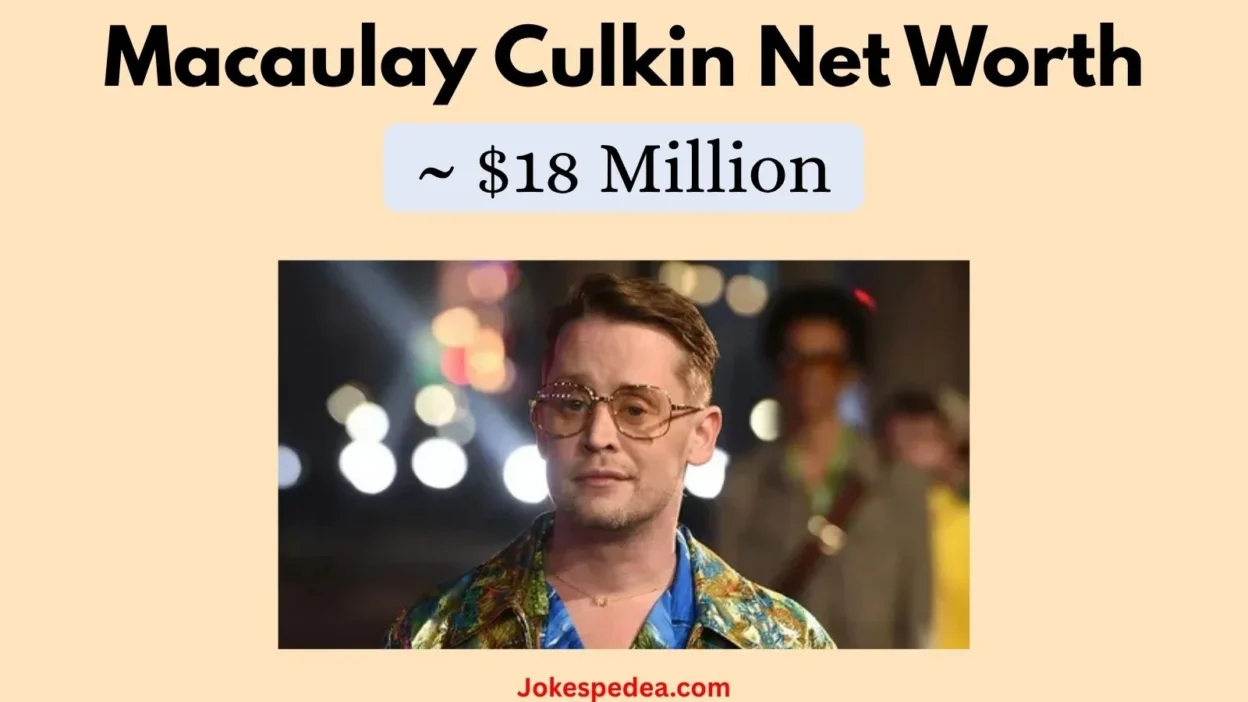
But today, Macaulay Culkin net worth sits at an estimated $15–18 million—a significant decline, but hardly the bankruptcy story many assume.
Unlike Kevin McCallister, who famously defended his house with creative booby traps, Culkin’s real-life financial story took a much more complicated turn, complete with a bitter legal battle against his own parents, a sudden retreat from acting, and persistent rumors of financial ruin.
Yet, the truth is more nuanced. After years out of the spotlight and a surprising modern comeback, Culkin’s finances reveal a man who lost millions but refused to lose everything.
Let’s break down exactly how he went from $60 million earned to $15 million today.
Macaulay Culkin Net Worth at a Glance
| Category | Details |
| Estimated net worth (2025) | $15–18 million |
| Peak career earnings (gross) | ~$50–60 million (adjusted for inflation: ~$100+ million) |
| Annual income at height (early 1990s) | $8 million+ per film |
| Estimated annual income today | $500,000 – $1.5 million |
| Primary income sources | Film residuals, podcast revenue, acting cameos, convention appearances, brand endorsements |
| Notable assets | Los Angeles home (estimated $1.5–2.5 million) |
| Known liabilities/debts | None publicly reported |
| Bankruptcy filings | None |
| Trust fund at center of 1995 lawsuit | $15–20 million |
| Relationship financial status | Partnered with Brenda Song (net worth ~$3–5 million); no prenup reported |
| Primary spending | Real estate, art, cats, past legal fees |
| Philanthropy | Minimal public record |
Who Is Macaulay Culkin?
Before diving into the numbers, it helps to understand the man behind the millions. Macaulay Carson Culkin was born on August 26, 1980, in New York City. He was the third of seven children born to Kit Culkin, a former stage actor, and Patricia Brentrup. From a young age, Macaulay showed natural charisma and comedic timing, thanks in part to his father’s theatrical background and his own early work in theater and commercials.
His big-screen breakthrough came in 1989 when he starred alongside John Candy in Uncle Buck. Director John Hughes was so impressed that he immediately cast Culkin as Kevin McCallister in Home Alone. Released in 1990, the film became a global phenomenon, grossing nearly $500 million worldwide and transforming a freckle-faced ten-year-old into an instant icon.
At his peak in the early 1990s, Culkin was arguably the most famous child actor in history. He followed Home Alone with hits like My Girl (1991), Home Alone 2: Lost in New York (1992), The Good Son (1993), and Richie Rich (1994). By age 14, he had already earned tens of millions of dollars and commanded salaries that rivaled adult A-listers.
But fame came at a steep price. Culkin later described his childhood as exhausting and controlling, with his father serving as an aggressive and financially questionable manager. By 1995, at just 15 years old, Culkin made a shocking decision: he announced a hiatus from acting. What followed was not peace, but a protracted legal war with his own parents over control of his fortune.
Peak Earnings: How Much He Made as a Child Star
To understand Macaulay Culkin net worth today, you first need to grasp just how much money flowed through his hands as a child. The numbers are staggering, even by Hollywood standards.
Culkin’s salary skyrocketed with each successive film. For the original Home Alone in 1990, he earned a relatively modest $100,000—a fair sum for a child actor at the time, but nothing compared to what followed. After the film’s massive success, his asking price exploded. For Home Alone 2: Lost in New York (1992), Culkin commanded an astonishing $4.5 million, with some reports pushing that figure as high as $8 million when bonuses and residuals were included.
He then earned approximately $5 million for My Girl (1991) and a reported $8 million for Richie Rich (1994). For The Good Son (1993), his salary landed in the $3–5 million range. Adding cameos, voice work, and merchandising deals—Culkin’s face was everywhere, from lunchboxes to video games—his total gross earnings by age 14 are estimated between $50 and $60 million.
Adjusted for inflation, that sum would exceed $100 million today. To put it in perspective, Culkin was earning more per film in the early 1990s than many seasoned A-list actors. He was, without exaggeration, the highest-paid child actor in Hollywood history up to that point. Yet, remarkably, almost none of that money was directly controlled by him. It sat in trust funds and accounts managed primarily by his father, Kit Culkin—a situation that would soon explode into a courtroom battle.
The Legal Battle: The Trust Fund Lawsuit
By 1995, Macaulay Culkin was only 15 years old but already a multimillionaire on paper. In reality, he had almost no control over his own fortune. His father, Kit Culkin, served as his de facto manager and controlled a trust fund reportedly worth $15–20 million. But Macaulay alleged that his father was mismanaging the money, making unauthorized withdrawals, and using his son’s earnings to fund a lavish lifestyle for himself and the extended family.
Tensions had been building for years. Kit was known as aggressive and difficult, clashing with studios and even reportedly demanding unreasonable perks for Macaulay. By 1995, Macaulay had had enough. He filed a lawsuit against his own parents to gain control of his trust fund, a shocking and highly publicized legal move for a teenager.
The case dragged on for months, exposing painful family dynamics. Macaulay testified that his father had isolated him from financial advisors and treated him more like an asset than a son. In the end, the court sided with Macaulay. He was granted control of his remaining assets, and his father was removed from any financial authority over the estate.
But the victory came at a steep price. Legal fees ate up millions of dollars. The emotional toll was severe enough that Macaulay announced his retirement from acting that same year. While he preserved a significant portion of his wealth, the lawsuit marked the beginning of a long financial and personal hiatus that would last well over a decade.
The Hiatus Years: Did He Go Broke?
After winning his legal battle in 1995, Macaulay Culkin stepped away from Hollywood entirely. He was just 15 years old. For the next decade and a half, he appeared in almost nothing. Rumors began swirling almost immediately: Was he broke? Did his parents steal everything? Was he living on the streets?
None of that was true. But the truth was still complicated.
Culkin never filed for bankruptcy. In fact, he never even came close. What he did instead was live quietly and frugally by celebrity standards. He moved into a modest apartment in New York City, avoided the paparazzi, and survived primarily on residuals from his childhood films—especially Home Alone, which continued to air on television every holiday season around the world.
At its peak, those residuals reportedly generated $500,000 to $1 million per year. That alone was enough to keep him comfortable without working a single day. He also made occasional low-key appearances and small projects, though none brought in significant money.
The media, however, loved painting a different picture. Tabloids ran headlines claiming he was “broke and homeless.” In reality, Culkin was simply choosing not to work. He later explained that he had been exhausted and traumatized by his childhood fame and needed to step away for his mental health. Financially, he was far from ruined—he just wasn’t interested in earning more.
Then came the strange years: a bizarre music career, a loft full of cats, and the internet’s fascination with his every odd move.
The Weird Phase: Art, Cats, and a 10,000-Sq-Ft Loft
By the late 2000s and early 2010s, Macaulay Culkin had fully embraced an eccentric, internet-beloved persona. He wasn’t acting in blockbusters anymore, but he wasn’t hiding either. Instead, he became a cult figure—famous for being famously weird.
In 2012, he appeared in a bizarre satirical short titled The Home Alone Trailer (Recut), playing a grown-up, traumatized Kevin McCartney. The video went viral but earned him little money. More notably, in 2013, he formed a comedy band called The Pizza Underground, which performed Velvet Underground parodies with lyrics about pizza. The gimmick earned him headlines, late-night show appearances, and a small touring income—but critics panned it, and the band fizzled out after a few years.
What really captured the public’s imagination was his living situation. Culkin purchased a sprawling 10,000-square-foot loft in Manhattan’s Tribeca neighborhood for approximately $2.6 million. Inside, he reportedly housed over a dozen cats, gave them whimsical names, and filled the space with art, arcade games, and an overall whimsical chaos. Photos of him looking disheveled but happy circulated widely.
Financially, this period was stable but unspectacular. He wasn’t earning millions, but he wasn’t losing money either. He later sold the Tribeca loft for around $3 million, pocketing a modest profit. Critics called him a has-been. Fans called him a legend. Culkin simply called it living on his own terms—money be damned.
The Comeback: Acting, Podcasting, and Brand Deals
After nearly two decades of near-complete retirement, Macaulay Culkin quietly began rebuilding his career—and his net worth—in the late 2010s. Unlike many child stars who attempt a splashy comeback, Culkin did it on his own terms, with small, unexpected roles that reminded audiences of his natural talent.
His first major return to mainstream acting came in 2019 when he joined the cast of American Horror Story: Double Feature. The role was well-received and reportedly paid him a respectable five-figure sum per episode. In 2020, he landed a massive payday by starring in a Home Alone-themed Google Assistant ad that aired during the Super Bowl. Industry estimates placed his earnings for that single commercial in the high six figures.
That same year, Culkin launched Bunny Ears, a comedy podcast and YouTube channel where he discussed pop culture, interviewed celebrities, and showcased his signature deadpan humor. The podcast generated revenue through ads, merchandise sales, and sponsorships—adding a steady, low-effort income stream.
In 2022, he received a star on the Hollywood Walk of Fame, an event that reignited public interest in his life and work. Shortly after, he was cast in Amazon’s acclaimed series Fallout, marking his most significant acting role in decades. He also began appearing at nostalgia conventions, where fan meet-and-greets and autograph sessions reportedly earn him $50,000 to $100,000 per appearance.
Collectively, these projects have pushed his annual income back into the $500,000 to $1.5 million range—not his childhood peak, but more than enough to live luxuriously.
Personal Life & Financial Partnerships
Macaulay Culkin’s personal life has played a significant role in his financial stability, particularly his long-term relationship with actress Brenda Song. The couple began dating in 2017 after meeting on the set of the film Changeland. Unlike many Hollywood romances, their partnership has remained notably private, drama-free, and financially sensible.
Brenda Song, best known for her roles in The Suite Life of Zack & Cody and the horror film The Social Network, has an estimated net worth of $3–5 million. While modest compared to Culkin’s peak earnings, her consistent acting work provides a steady household income. The couple reportedly shares expenses and has not signed a prenuptial agreement, though they are not officially married as of 2025.
Together, they have two children, born in 2021 and 2022. Culkin has said in interviews that fatherhood changed his perspective on money entirely. He went from being indifferent about earning to actively seeking stable, family-friendly projects. The couple currently resides in Los Angeles, in a home valued between $1.5 and $2.5 million. They are not known for extravagant spending, luxury vacations, or flashy cars.
Song’s own financial discipline likely complements Culkin’s more laissez-faire approach. Friends describe them as a grounded pair who prioritize their children’s privacy over red-carpet appearances. From a net worth perspective, their partnership is mutually beneficial—neither is carrying the other financially. Instead, they represent a rare Hollywood couple whose combined finances are stable, modest for their fame level, and entirely debt-free by all public records.
Assets, Spending, and Lifestyle
Unlike many former child stars who blow through millions on yachts, luxury cars, and nightclub bottles, Macaulay Culkin has lived a surprisingly modest lifestyle. His spending habits explain much of why his net worth remains healthy despite decades of limited work.
Let’s start with real estate. Culkin’s most notable property was his 10,000-square-foot Tribeca loft in New York City, purchased for approximately $2.6 million. He sold it years later for around $3 million, earning a modest profit. Today, he owns a home in Los Angeles valued between $1.5 and $2.5 million, where he lives with Brenda Song and their two children. He owns no other known properties.
When it comes to vehicles, Culkin is famously uninterested. He has never been photographed with a supercar collection. Reports suggest he drives practical, everyday cars—or simply uses rideshares. Unlike celebrities who sink millions into garages full of Ferraris and Lamborghinis, Culkin treats cars as appliances.
His known expenses are quirky but not ruinous. He has spent significant money on art, particularly pieces by underground and contemporary artists. His love for cats led to owning over a dozen at one point, with associated vet bills and care costs. Past legal fees from his 1995 lawsuit against his parents likely ate up several million dollars. He has also faced minor health issues over the years, though nothing that led to financial distress.
What he does not spend on is telling: no private jets, no luxury watches, no multi-million-dollar parties. Culkin’s lifestyle is best described as comfortably eccentric—not frugal, but far from extravagant.
Current Macaulay Culkin Net Worth (2025 Estimate)
After examining his peak earnings, legal battles, hiatus years, weird phase, comeback, and lifestyle, we arrive at the central question: What is Macaulay Culkin’s net worth in 2025?
The most reliable estimates from credible celebrity finance sources place his current net worth between $15 million and $18 million. This figure represents a significant decline from the $50–60 million he grossed as a child star, but it is hardly the bankruptcy story that tabloids once sold.
How does this compare to other child stars? Daniel Radcliffe, of Harry Potter fame, is worth approximately $110 million. The Olsen twins each sit around $250 million. Elijah Wood, similar to Culkin in career trajectory, has roughly $20 million. By that standard, Culkin is underperforming relative to his early earnings but remains comfortably within the upper tier of former child actors.
Why $15–18 million specifically? Let’s break it down. He likely retained $10–15 million from his childhood after legal fees and spending. His Tribeca loft sale added approximately $400,000 in profit. Residuals from Home Alone and other films have generated an estimated $500,000 to $1 million annually for decades—totaling $10–15 million in lifetime passive income. His recent acting roles, podcast, Super Bowl ad, and convention appearances have added another $2–4 million since 2019.
Subtract living expenses, legal fees, and taxes, and the $15–18 million range is entirely plausible. He carries no public debt, owns his home, and continues to earn steady residuals. Macaulay Culkin is not a cautionary tale—he is a survivor.
Common Myths vs. Facts
Few celebrities have been the subject of as many financial rumors as Macaulay Culkin. Over the years, tabloids and social media have painted a picture of total ruin. But how much of that is actually true? Let’s separate fact from fiction.
Macaulay Culkin went bankrupt.
Fact: He has never filed for bankruptcy. Not once. His credit history shows no Chapter 7 or Chapter 13 filings. The rumor likely started because he stopped working, not because he ran out of money.
His parents stole every penny.
Fact: His father mismanaged his trust fund, and Macaulay successfully sued to gain control. While he lost millions to legal fees and poor oversight, he did not lose everything. He walked away with a substantial remaining fortune.
He is broke and homeless.
Fact: Culkin owns a multi-million dollar home in Los Angeles. He has never been homeless. This myth originated from paparazzi photos of him looking disheveled—a style choice, not evidence of poverty.
He hasn’t worked in decades.
Fact: While he took a long hiatus, Culkin has worked steadily since 2019, including American Horror Story, a Super Bowl commercial, his Bunny Ears podcast, and Amazon’s Fallout series.
He spent everything on drugs.
Fact: Culkin has been open about past drug use, including a 2004 arrest for marijuana and prescription drug possession. However, there is no evidence that drug abuse ever came close to bankrupting him. His spending has always been modest relative to his wealth.
The truth is far less dramatic—but far more impressive. Culkin lost millions, but he never lost control of his future.
Lessons from Macaulay Culkin’s Financial Journey
Macaulay Culkin’s net worth story offers valuable lessons for anyone—not just child stars—about money, fame, and long-term financial health. Here are the key takeaways.
1: High income does not guarantee lasting wealth. Culkin earned over $50 million as a child, yet his net worth today is roughly one-third of that. Without proper oversight and legal protection, even massive earnings can shrink dramatically.
2: Legal separation of earnings from family is critical. Culkin’s biggest financial mistake was not his own—it was trusting his father to manage everything. Child actors (and anyone earning significant money) should have independent financial advisors and legal structures that separate personal assets from family control.
3: Residuals are a powerful wealth-building tool. Even during his two-decade hiatus, Culkin never stopped earning. Home Alone residuals provided a reliable annual income of $500,000 to $1 million. Passive income from intellectual property can sustain you through unemployment, burnout, or career changes.
4: Walking away is not the same as failing. Culkin chose mental health over more millions. That decision didn’t bankrupt him—it preserved what he already had. Sometimes, the best financial move is to stop chasing more.
5: Modest spending preserves wealth. Culkin never bought yachts, private jets, or mansions. He lived reasonably, sold his NYC loft for a profit, and avoided debt. You don’t need to be frugal—just avoid lifestyle inflation.
6: A quiet comeback can rebuild anything. Culkin didn’t try to reclaim his childhood fame. He built a small, sustainable career on his own terms. That approach has added millions to his net worth without the pressure of blockbuster expectations.
FAQs
1. What is Macaulay Culkin’s net worth in 2025?
Macaulay Culkin’s net worth is estimated between $15 million and $18 million as of 2025.
2. How much did Macaulay Culkin make for Home Alone?
He earned approximately $100,000 for the first Home Alone film. For Home Alone 2: Lost in New York, his salary jumped to an estimated $4.5–8 million.
3. Did Macaulay Culkin go broke?
No. He never filed for bankruptcy. While he lost a significant portion of his childhood fortune due to legal fees and parental mismanagement, he remained financially stable throughout his career hiatus.
4. Does Macaulay Culkin still get paid for Home Alone?
Yes. He receives residuals every time Home Alone airs on television or streams on platforms. At its peak, this passive income generated an estimated $500,000 to $1 million annually.
5. Why did Macaulay Culkin stop acting?
He stopped acting in 1995 at age 15 due to exhaustion, family conflict, and the emotional toll of childhood fame. He has described it as a necessary break for his mental health.
6. What does Macaulay Culkin do for money now?
He earns from acting roles (American Horror Story, Fallout), his Bunny Ears podcast, nostalgia convention appearances, brand endorsements (including a Super Bowl ad for Google), and film residuals.
7. Is Macaulay Culkin married to Brenda Song?
They are not officially married as of 2025, but they have been in a long-term relationship since 2017 and have two children together.
8. How does Macaulay Culkin’s net worth compare to other child stars?
He has less than Daniel Radcliffe ($110M) and the Olsen twins ($250M each), but he is comparable to Elijah Wood ($20M) and significantly wealthier than many former child stars who did face bankruptcy.
9. What happened to Macaulay Culkin’s trust fund?
He sued his parents in 1995 to gain control of his $15–20 million trust fund, alleging mismanagement by his father. The court ruled in his favor, and he gained control of his remaining assets.
10. Does Macaulay Culkin own a house?
Yes. He owns a home in Los Angeles valued between $1.5 million and $2.5 million, where he lives with Brenda Song and their children. He previously owned a Tribeca loft in New York City, which he sold for approximately $3 million.
Conclusion
Macaulay Culkin’s net worth today—$15–18 million—tells a story not of tragedy, but of resilience. He earned a fortune as a child, lost millions to legal battles, stepped away from fame for nearly two decades, and quietly rebuilt his life on his own terms.
He never went bankrupt and never lost everything. Instead, he prioritized sanity over salary and emerged with both his wealth and his well-being intact.
Kevin McCallister built booby traps to protect his home. Macaulay Culkin built boundaries to protect his future. That is a richer ending than any tabloid ever wrote.