
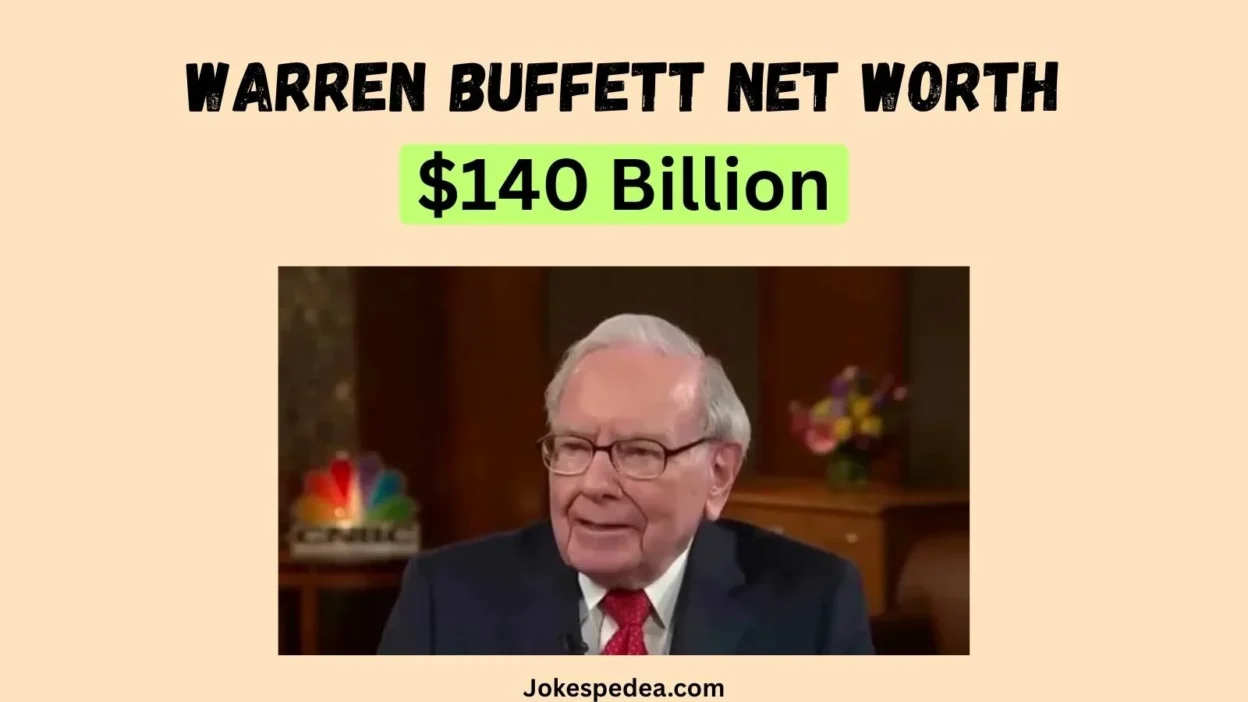
Curious about Warren Buffett net worth and how one of the greatest investors built such an enormous fortune? As of 2026, the net worth of Warren Buffett is estimated at around $145–$150 billion, placing him among the richest people on the planet.
What’s interesting is that his wealth isn’t fixed—it can move by billions in a single day, mainly because of the stock performance of Berkshire Hathaway.
But here’s the real story—Buffett didn’t rely on hype, tech trends, or overnight success. He built his fortune slowly through smart investing, discipline, and long-term thinking.
In this article, you’ll discover not just the latest numbers, but also how his wealth grew, where it comes from, and what practical lessons you can learn from his journey to build your own financial future.
Warren Buffett Net Worth (Year-by-Year)
Here’s a clear look at how the net worth of Warren Buffett has grown over the years:
| Year | Estimated Net Worth (USD) |
| 2000 | $30 Billion |
| 2005 | $44 Billion |
| 2010 | $47 Billion |
| 2015 | $72 Billion |
| 2018 | $84 Billion |
| 2020 | $67 Billion |
| 2021 | $96 Billion |
| 2022 | $106 Billion |
| 2023 | $118 Billion |
| 2024 | $130 Billion |
| 2025 | $140 Billion |
| 2026 | $145–$150 Billion |
👉 Simple Explanation:
Buffett’s wealth didn’t grow overnight. It increased steadily over decades thanks to his investments through Berkshire Hathaway and the power of compounding.
👉 Important Note:
These numbers are estimates and can change frequently due to stock market movements.
How Warren Buffett Made His Money
The story behind Warren Buffett net worth is surprisingly simple—and that’s what makes it powerful. Buffett didn’t rely on risky bets or fast trends. Instead, he focused on buying great businesses and holding them for the long term.
The biggest driver of his wealth is Berkshire Hathaway, a company he transformed from a struggling textile business into a massive investment powerhouse. Through Berkshire, Buffett owns or invests in dozens of companies across industries like insurance, energy, railroads, and consumer goods. This diversification helps generate steady and reliable income.
A large portion of his fortune also comes from stock investments. Buffett is known for investing in strong, well-known companies with consistent performance. Some of his most famous holdings include Apple Inc. and Coca-Cola. These companies not only grow in value over time but also pay dividends, which provide Buffett with billions in passive income every year.
Another key factor is compounding—earning returns on previous returns. Buffett started investing at a young age, and over decades, his money kept growing exponentially. This long-term approach allowed small investments to turn into billions.
In simple terms, Buffett made his fortune by staying patient, avoiding unnecessary risks, and sticking to a proven strategy. His journey shows that building wealth doesn’t require luck—it requires consistency and smart decision-making.
Warren Buffett Net Worth Growth Over Time
The growth of Warren Buffett net worth is one of the best real-life examples of how long-term investing works in action. The wealth of Warren Buffett didn’t rise in a straight line—it grew in phases, often accelerating when markets performed well and slowing during economic downturns.
In his early career, Buffett’s net worth was relatively modest as he focused on learning, investing, and building capital. The real turning point came when he took control of Berkshire Hathaway and began using it as a holding company for large-scale investments. This shift allowed his wealth to compound much faster.
From the 1980s onward, his fortune began to rise significantly as Berkshire invested in major companies and industries. The 2000s brought even faster growth due to strong stock market performance and long-term holdings in high-performing businesses like insurance and consumer goods.
In recent years, Buffett’s net worth has crossed the $100 billion mark, driven largely by the rise in value of publicly traded companies in Berkshire’s portfolio. However, his wealth still fluctuates daily because it is heavily tied to the stock market.
What makes this growth remarkable is not just the size, but the consistency over decades. Unlike many billionaires who experience rapid spikes, Buffett’s wealth reflects patience, discipline, and a strategy built on steady, long-term compounding rather than short-term gains.
Warren Buffett’s Investing Strategy Explained
The reason behind Warren Buffett net worth is not luck—it’s a clear and disciplined investing philosophy. The strategy of Warren Buffett is built on one core idea: buy great businesses and hold them for decades.
Buffett follows what is called value investing. This means he looks for companies that are strong, stable, and trading at a fair or discounted price. Instead of chasing popular trends, he focuses on businesses with long-term potential, solid management, and consistent earnings.
A major part of his success comes from staying invested in Berkshire Hathaway, which acts as his main investment vehicle. Through it, he gains ownership in hundreds of businesses across different industries, reducing risk and increasing stability.
Another key principle is compounding—earning returns on top of returns over time. Buffett once explained that the best investment is simply to give your money time to grow. This is why he rarely sells high-quality stocks, even during market ups and downs.
He also strongly avoids unnecessary risk. Buffett does not invest in things he does not understand, and he avoids speculation. This simple rule has protected his wealth during financial crises and market crashes.
Most importantly, Buffett emphasizes patience over speed. While many investors try to get rich quickly, he focuses on steady growth over decades.
In short, his strategy proves that building massive wealth is not about complexity—it’s about discipline, long-term thinking, and sticking to proven principles.
Warren Buffett Net Worth vs Other Billionaires
When comparing Warren Buffett net worth with other global billionaires, one thing becomes very clear—his wealth is built differently. The fortune of Warren Buffett is estimated at around $145–$150 billion, but unlike many tech billionaires, his growth has been steady rather than explosive.
For example, Elon Musk often holds the top position in global wealth rankings, with net worth swinging dramatically based on Tesla’s stock performance. Similarly, Jeff Bezos built his fortune through rapid expansion of Amazon, especially during the e-commerce boom.
Buffett, on the other hand, built his wealth through long-term investing and ownership of diversified businesses under Berkshire Hathaway. While tech billionaires experienced rapid billion-dollar jumps in short periods, Buffett’s wealth grew gradually over decades.
Another key difference is stability. Many billionaires see large fluctuations in net worth due to heavy dependence on a single company. Buffett’s portfolio is more balanced, including insurance, railroads, energy, and consumer goods, which makes his wealth more resilient during market downturns.
Also, Buffett is known for giving away a large portion of his fortune through philanthropy, which also affects his ranking compared to other billionaires who reinvest or accumulate wealth.
In simple terms, while others built wealth through speed and innovation, Buffett built his fortune through patience, consistency, and compounding returns. This makes his financial journey one of the most unique in the world of billionaires.
Philanthropy and How Buffett Uses His Wealth
A major part of understanding Warren Buffett net worth is knowing that a significant portion of his fortune is not just stored—it is actively being given away. The wealth of Warren Buffett is not only about accumulation, but also about large-scale philanthropy.
Buffett has pledged to donate more than 99% of his wealth over time. Instead of keeping most of his billions, he has committed to giving them to charitable causes through major organizations, most notably the Bill & Melinda Gates Foundation. This foundation focuses on global health, education, poverty reduction, and development programs around the world.
What makes Buffett’s approach unique is that he prefers structured giving over time, rather than one-time donations. Each year, he donates billions of dollars worth of Berkshire Hathaway shares, gradually reducing his personal net worth while increasing his impact.
Despite being one of the richest people in the world, Buffett is also known for his simple lifestyle. He still lives in the same house he bought decades ago in Omaha and avoids luxury spending habits that are common among billionaires. This reinforces his belief that money is a tool, not a lifestyle goal.
His philanthropy also affects comparisons with other billionaires, since many wealthy individuals retain or reinvest their fortunes, while Buffett actively distributes his.
In essence, Buffett’s wealth story is not just about building billions—it is equally about giving them away in a meaningful and impactful way, which adds a powerful dimension to his financial legacy.
Lifestyle and Spending Habits of Warren Buffett
When people hear about Warren Buffett net worth, they often expect a billionaire lifestyle filled with luxury cars, mansions, and extravagant spending. However, the life of Warren Buffett is surprisingly simple and practical.
Even with a fortune estimated at $145–$150 billion, Buffett still lives in the same house he bought in Omaha in 1958. He prefers comfort and familiarity over luxury upgrades. This choice reflects his belief that happiness does not come from expensive possessions but from stability and purpose.
Buffett is also known for his extremely modest daily habits. He enjoys simple meals, often eats fast food, and avoids unnecessary luxury expenses. Despite having access to private jets and elite services through Berkshire Hathaway, he has consistently emphasized cost efficiency and value.
Another interesting fact is that Buffett earns a relatively small official salary compared to his net worth. Most of his wealth comes from long-term investments rather than income-based earnings. This reinforces the idea that ownership and compounding matter more than salary alone.
His spending philosophy is deeply connected to his investing mindset. Just as he avoids unnecessary risks in the market, he also avoids unnecessary expenses in life. This disciplined approach has helped him preserve and grow wealth over decades.
In short, Buffett’s lifestyle shows that being extremely wealthy does not require living extravagantly. Instead, his life proves that simplicity, discipline, and focus on long-term value can go hand in hand with building one of the largest fortunes in the world.
Does Warren Buffett Net Worth Change Daily?
Yes—Warren Buffett net worth changes almost every single day, and sometimes by billions of dollars. The wealth of Warren Buffett is closely tied to the stock market, which means even small market movements can significantly impact his fortune.
The main reason for this fluctuation is his massive ownership in Berkshire Hathaway. Since Berkshire is a publicly traded company, its stock price rises and falls daily based on market conditions, investor sentiment, and economic news. When the stock goes up, Buffett’s net worth increases. When it drops, his net worth decreases.
Unlike people who earn fixed salaries, Buffett’s wealth is largely paper wealth, meaning it exists in the value of shares rather than cash. This is why his net worth can swing dramatically in a short time without him actually buying or selling anything.
Economic factors also play a big role. Interest rates, inflation, and global financial trends all influence stock prices, which indirectly affect Buffett’s wealth. During strong bull markets, his net worth can rise rapidly. During recessions or market crashes, it can temporarily shrink.
However, Buffett himself does not focus on these daily changes. His strategy is built on long-term thinking, not short-term fluctuations. He has often said that market volatility is normal and should not distract investors from long-term goals.
In simple terms, Buffett’s net worth is like a reflection of the stock market itself—constantly moving, but driven by long-term value rather than daily noise.
Future Outlook of Warren Buffett Net Worth
The future of Warren Buffett net worth is shaped by both market performance and his long-term financial philosophy. As of now, the wealth of Warren Buffett is expected to continue fluctuating rather than following a straight upward path, mainly because it is heavily tied to public markets.
A major factor influencing his future net worth is the performance of Berkshire Hathaway. As long as Berkshire continues to perform well across its diverse portfolio—insurance, energy, railroads, and consumer goods—Buffett’s wealth is likely to remain strong and stable. However, like all investors, he is still exposed to economic cycles, recessions, and global financial shifts.
Another important element is succession planning. Buffett has already prepared for leadership transition within Berkshire Hathaway, which ensures the company continues operating smoothly even after his tenure. This long-term planning helps protect the value of his legacy and wealth.
It is also important to note that Buffett continues to donate large portions of his wealth every year. As his philanthropy increases, his personal net worth may grow at a slower pace compared to other billionaires who continue accumulating assets.
Despite these factors, Buffett’s financial philosophy ensures that his wealth is not focused on short-term gains but on long-term preservation and steady growth. Even if he is no longer actively managing investments in the future, the structure he built is designed to continue generating value.
In simple terms, Buffett’s future net worth will likely remain massive, but its real story will continue to be about stability, discipline, and long-term impact rather than rapid growth.
FAQs About Warren Buffett Net Worth
Here are some of the most common questions people ask about Warren Buffett net worth and his financial journey.
What is Warren Buffett’s net worth in 2026?
The net worth of Warren Buffett in 2026 is estimated at around $145–$150 billion, mainly driven by his holdings in Berkshire Hathaway.
How did Warren Buffett become so rich?
Buffett built his fortune through value investing, long-term stock ownership, and compounding returns over decades. He focuses on buying strong businesses and holding them for years.
What companies does Warren Buffett own?
Through Berkshire Hathaway, he has partial ownership in many major companies, including insurance firms, railroads, energy businesses, and consumer brands like Apple and Coca-Cola.
Does Warren Buffett’s net worth change often?
Yes, his net worth changes daily because it is linked to the stock market. When Berkshire Hathaway’s stock rises or falls, his wealth moves with it.
Does Warren Buffett give away his money?
Yes, Buffett has pledged to donate over 99% of his wealth, mainly through the Bill & Melinda Gates Foundation, supporting global health and education initiatives.
Conclusion
The journey of Warren Buffett net worth is more than just a story of numbers—it’s a lesson in patience, discipline, and long-term thinking. The fortune of Warren Buffett, built through decades of investing in Berkshire Hathaway and strong businesses, shows that real wealth is not created overnight. Instead, it grows slowly through smart decisions, consistency, and the power of compounding.
What makes Buffett truly unique is not just his billions, but how simply he lives and how much he gives away. His journey proves that success in investing is less about timing the market and more about time in the market.